Every brand needs a logo, but not every logo gets remembered. You have probably seen thousands of logos, on packaging, apps, storefronts, social media, and most of them left no impression at all. That is not because the designers were careless. It is because designing a logo that actually sticks in someone’s memory is harder than it looks. It takes more than picking a font you like or finding a color that feels right. There is real psychology behind why certain marks stay with people for years, and others get forgotten by the time you close the tab.
This article gets into what actually makes logo designs work, the shapes, colors, typography decisions, and structural choices that influence how people process and recall a visual mark. We also cover the practical side: logo types, what a brand guideline guide does for you, and how to think about your logo budget without overpaying or cutting corners that will cost you later.
Whether you are starting from scratch or rethinking something that is not working, this is meant to give you a clearer picture of what to aim for.
In this article you will find a breakdown of each factor that shapes a memorable logo, with psychology, real-world examples, and a reference table to keep things clear. Hope it helps make your next logo design one that people actually remember.
1. Why Most Logos Get Forgotten
Think about how many logos you saw today, on your phone, on a shirt, on a bag. You probably remember three or four of them. The rest just disappeared. That is not random. There is actual psychology behind why some logo designs stick in your brain and others do not.
A memorable logo is not just a pretty picture. It is a mark your brain stores without much effort. Psychologists call this “fluency”, when something is easy for your brain to process, you tend to like and remember it more. Bad logos make your brain work too hard. Good ones register fast, like a face you recognize in a crowd.
Take the Nike swoosh. It is one curved line. No words needed. Your brain locks it in almost immediately. That is not an accident, it was designed to be fast to read and easy to recall. This article breaks down exactly how that works, so you can apply it to your own logo designs.
2. The Psychology Behind Shape and Recognition
Shapes talk to people without using words. Circles feel safe and friendly, brands like Pepsi and Chrome use them because they feel approachable. Sharp triangles or angles feel bold or tense, think of the arrow in the FedEx logo or the pointed “A” in brands trying to feel ambitious.
Psychologists have studied how shapes affect mood and trust for decades. In one line of research from Gestalt psychology, humans naturally look for patterns and closed shapes. Your brain wants to complete incomplete shapes, which is why logos like the WWF panda or the NBC peacock work. They give you just enough to trigger recognition.
When you are figuring out how to design a memorable logo, think about what emotion your shape suggests. Rounded shapes calm people down. Straight lines and squares feel structured. Asymmetry can feel creative but risks feeling unstable. None of these are rules, they are tendencies worth knowing before you start sketching.
3. Color Does More Than Look Nice
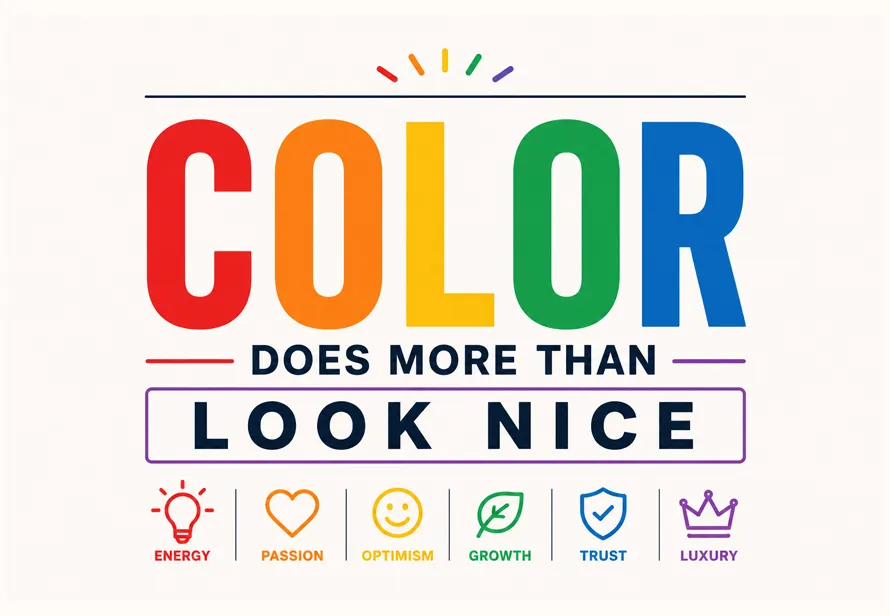
Color is one of the fastest ways your brain categorizes things. Before you read a word, you have already felt something about the color. Red triggers urgency and energy, McDonald’s and Coca-Cola both lean on it. Blue signals trust and calm, banks, tech companies, and healthcare brands use it constantly. Yellow suggests warmth or caution depending on context.
This is not just theory. A study published in the journal Management Decision found that color increases brand recognition by up to 80 percent. That is a big number for something that sometimes feels like a subjective choice. When you are building logo designs, your color decision should come from what your brand needs to communicate, not just what you personally like.
One practical tip: design your logo in black and white first. If it works without color, it will work with color too. Color should strengthen a logo, not carry it. A logo that only works because of its color is fragile, print it in grayscale on a fax or an invoice and it falls apart completely.
4. Simplicity Is Not the Same as Boring
People confuse simple with plain, and that is a mistake. Apple’s logo is simple. The Twitter bird is simple. The Mercedes-Benz three-pointed star is simple. None of them are boring. Simplicity means there is nothing unnecessary, every part of the shape earns its place.
The psychology here is about memory load. Your short-term memory can hold a limited amount of information at once. A cluttered logo forces your brain to process too many details, so it gives up storing them. A clean logo gets stored with very little effort. That is why simple logo designs tend to outlast complicated ones across decades.
When you start thinking about how to make a logo, sketch the idea first. Then remove one element. Then remove another. Keep going until you cannot remove anything else without breaking the idea. What you are left with is usually the strongest version. This process is harder than adding things, but it produces something worth remembering.
Common Reasons Logo Designs Fail (Bad Logo vs Good Logo)
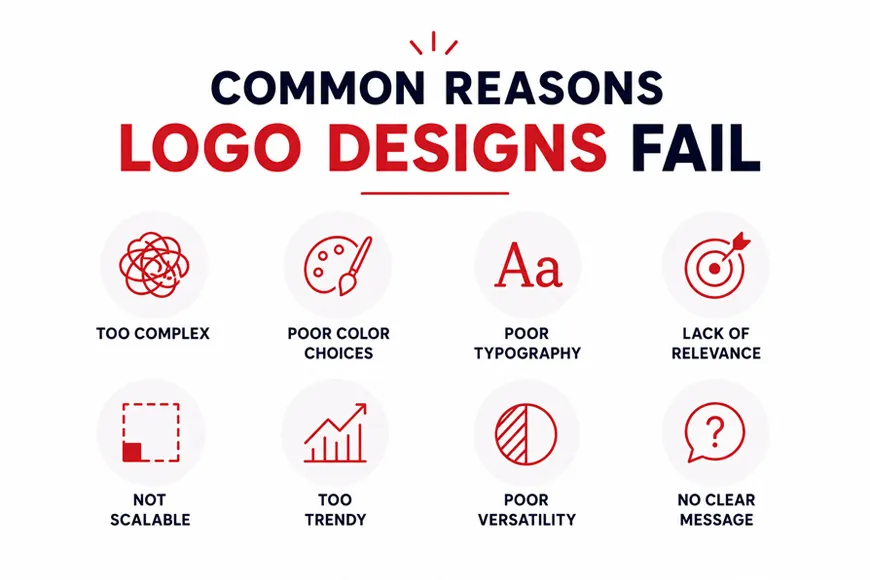
Not every logo design succeeds, even if it looks visually impressive at first glance. Some logos fail because they prioritize trends over clarity, while others try to communicate too many ideas at once. A good logo feels effortless to recognize. A bad logo usually creates confusion, clutter, or forgettable visuals.
One of the most common mistakes is adding too many details. Complex illustrations, excessive gradients, or tiny decorative elements might look interesting on a large screen, but they quickly become unreadable at smaller sizes. A memorable logo design needs to work everywhere, from a website favicon to a billboard.
Typography is another major difference between weak and effective logos. Bad logos often use hard-to-read fonts or overly trendy typefaces that age quickly. Good logos use typography that matches the brand personality while staying clear and scalable across all formats.
Color choices also separate strong logos from weak ones. Too many colors create visual noise and make recognition harder. Strong logo designs usually rely on a focused palette with one to three dominant colors that support the brand message.
| Bad Logo Design | Good Logo Design |
| Too many visual elements | Simple and focused composition |
| Unreadable typography | Clear, scalable typography |
| Overuse of trendy effects | Timeless visual approach |
| Weak black-and-white visibility | Works in every color mode |
| Generic stock icons | Distinctive recognizable shapes |
| Too many colors | Controlled color palette |
| Poor scalability | Looks good at every size |
A useful test is to look at your logo for five seconds and then sketch it from memory an hour later. If the main shape disappears from your mind completely, the design may be too complicated or visually generic. The best logos are usually the easiest to recall because they communicate one clear idea instead of several competing ones.
5. Typography Carries a Personality
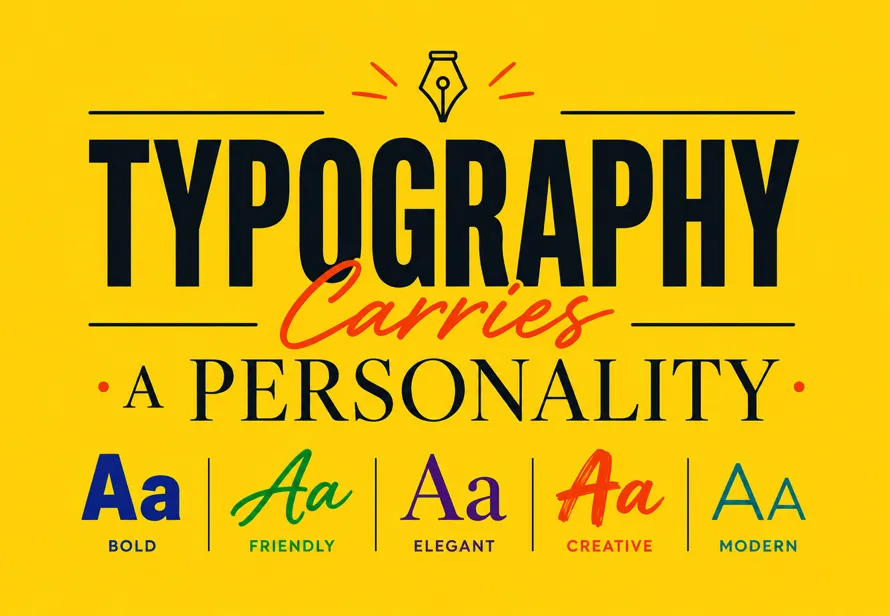
If your logo uses text, a wordmark or a lettermark, the font you choose is doing half the work. Serif fonts like Times New Roman feel traditional and authoritative. Sans-serif fonts like Helvetica feel modern and clean. Script fonts feel personal or luxurious. Each of these sends a different message before anyone reads a single word.
Look at how Google handles this. Their logo uses a rounded, friendly sans-serif. It feels approachable and a little playful, which matches what Google wants you to feel about a search engine. Now imagine that same word in a heavy gothic serif font. It would feel completely different, more like a legal firm than a tech product.
Typography also affects readability at different sizes. Your logo needs to work on a business card and on a billboard. Test your font choices at small sizes before committing. If the letters blur together or lose definition below a certain size, that font is going to cause problems in real-world usage across your brand materials.
6. Logo Types – Which One Works for You?
There are several main categories of logo designs, and picking the right type matters based on your brand stage and what you are trying to communicate.
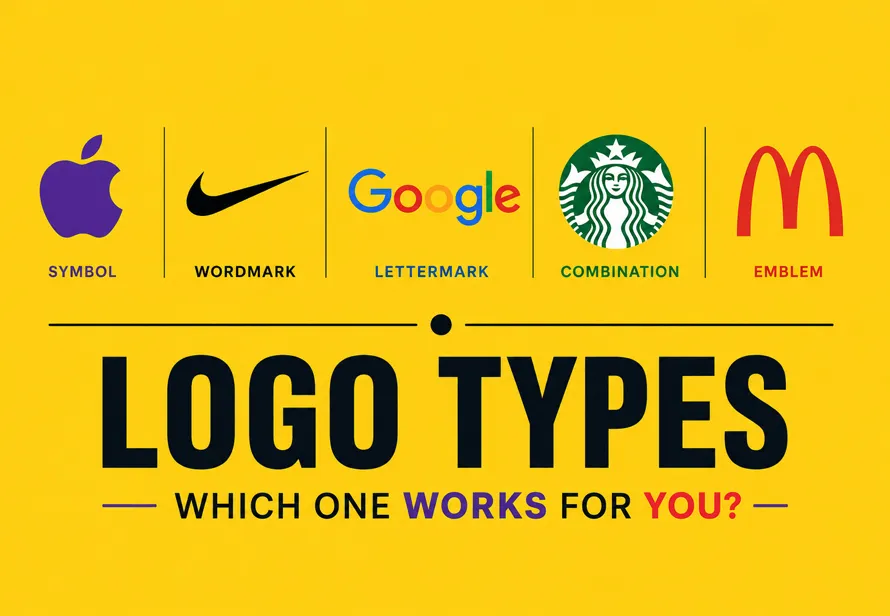
| Logo Type | What It Is | Example | Best For |
| Wordmark | Brand name in styled text | Google, Visa, FedEx | Brands with a unique or short name |
| Lettermark | Initials only | IBM, NASA, HBO | Brands with long names |
| Pictorial Mark | Icon or symbol only | Apple, Twitter bird | Established brands |
| Abstract Mark | Geometric shape, no literal image | Pepsi, Nike swoosh | Brands wanting flexible symbolism |
| Combination Mark | Icon plus wordmark together | Adidas, Burger King | New brands building recognition |
| Emblem | Text inside a shape or badge | Starbucks, Harley-Davidson | Brands wanting a classic or official feel |
If you are a new brand, combination marks tend to work well because you are building name recognition and visual identity at the same time. As people get to know your brand, the icon can eventually stand alone.
7. Style, Consistency, and Your Brand Guideline Guide
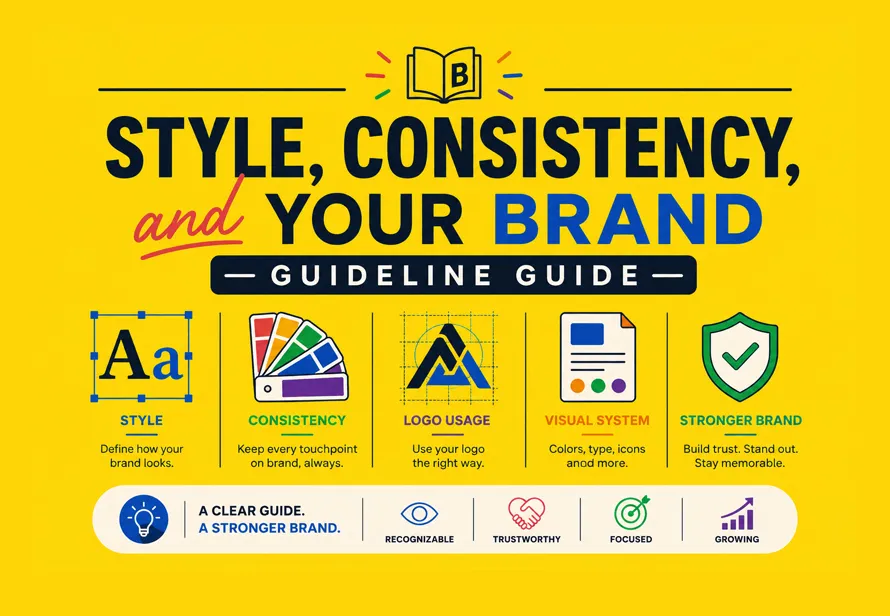
A logo does not live alone. It appears on websites, packaging, social profiles, email signatures, and merchandise. If it looks slightly different in every place, different shade of blue here, different font weight there, it stops feeling like one brand and starts feeling scattered.
This is where a brand guideline guide becomes practical, not just something agencies upsell you on. A brand guideline is a document that spells out the exact colors (with hex codes and Pantone numbers), the exact fonts, the minimum size the logo can appear, how much space should surround it, and what you should never do to it (stretch it, recolor it, add a drop shadow to it).
Having a brand guideline guide saves you from making small inconsistency mistakes that add up over time. If you hire a freelancer to design a banner, you hand them the guide. If a vendor needs your logo for a print job, they use the guide. It keeps everything looking like it came from the same place, which builds recognition faster than any single clever design decision.
8. Logo Budget and Pricing, What Should You Expect?
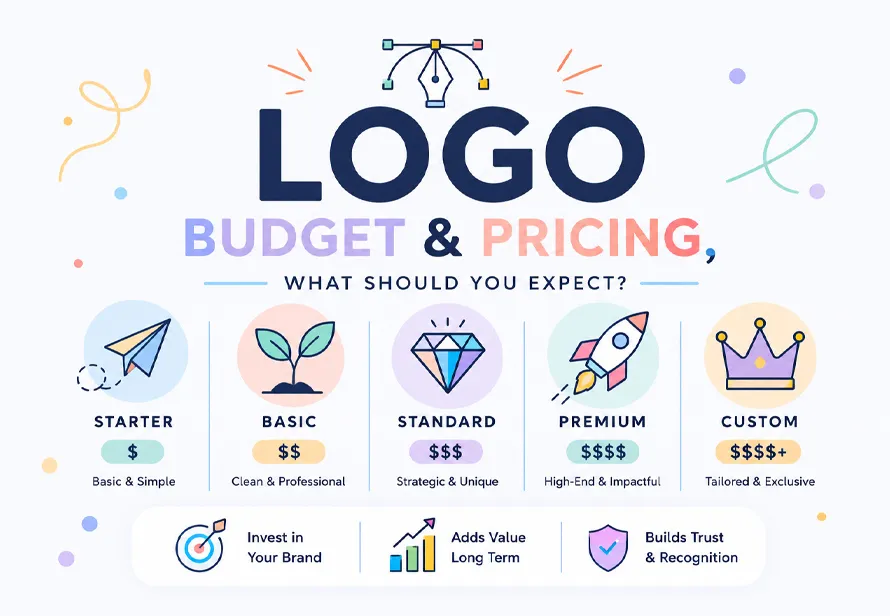
Logo budget is one of the most common questions people ask when starting a brand, and the answer varies more than most people expect. A logo can cost anywhere from twenty dollars on a crowdsourcing site to twenty thousand dollars from a branding agency. The price difference reflects not just the quality of the design, but the research, strategy, and revision process behind it.
For small businesses or personal brands, a logo budget of three hundred to fifteen hundred dollars for a professional freelancer is a reasonable starting range. This typically covers a discovery call, a few initial logo concepts, and two or three rounds of revisions. What you get at this logo pricing level is a designer who asks questions about your audience and goals before opening any software.
What you often do not get at the lower end of logo pricing is a full brand guideline guide, multiple file formats, or ownership of the source files. Always ask before you hire. The file types you receive matter, you need a vector file (AI or EPS) to scale your logo to any size without it going blurry. A JPEG alone is not enough. Spending a little more upfront to get the right files avoids expensive redesigns later.
9. Quick Reference Table: Logo Concepts at a Glance
| Concept | What to Consider | Psychology Tie-In |
| Shape | Round vs. angular | Circles = trust, angles = energy |
| Color | One to three colors max | Color affects emotion and recall |
| Font Style | Serif vs. sans-serif vs. script | Communicates brand personality |
| Complexity | Fewer elements = easier recall | Short-term memory limitation |
| Scalability | Works small and large | Ensures real-world usability |
| Color Mode | RGB (screen) vs. CMYK (print) | Avoids color mismatch in production |
| File Type | Vector vs. raster | Vector scales without quality loss |
| Keywords | Brand values embedded in design | Shapes meaning in the viewer’s mind |
10. Final Thoughts
A logo is not decoration. It is the fastest version of your brand story, compressed into a shape, a color, and maybe a few letters. The logos that people remember are the ones that made deliberate choices about every one of those elements.
You do not need a massive logo budget to get a logo that works. You need to understand what you are trying to communicate, pick the right logo type for where your brand is right now, and work with someone who will think through the psychology, not just the aesthetics.
And once you have a logo worth keeping, protect it with a proper brand guideline guide. Because a great logo designs your brand’s recognition over time, but only if it shows up the same way every single time.
(Visited 59 times, 13 visits today)