
Building a strong brand in 2026 requires businesses to move away from generic marketing to instead focus on things like deep personalization, AI optimization and community-driven trust. In a modern era where AI tools are heavily influencing consumer choices, successful brands need to be instantly recognizable, highly authentic and completely consumer-focused.
Modern consumers are increasingly showing more of a preference for genuine connection over automated corporate messaging. For brands, this means that their success in the current market relies on their ability to transition from generic, algorithmic noise to a more radical human-centeredness, hyper-personalization and overall operational consistency.
As such, true brand equity has become synonymous with emotional trust, unique identity and flawless execution. This article will explore seven essential steps to establishing a market-dominating brand.
Step 1: Uncovering Deep Audience Insights
Traditional demographic tracking has become a thing of the past and now modern brands need to analyze real-time consumer behaviors, cultural shifts and micro-communities.
This means going beyond the superficial demographic analysis to uncover deeper insights using strategies like:
- Tracking active psychographics
- Deploying social listening tools
- Analyzing real emotional intent
- Building dynamic consumer personas
You need to be keenly aware of what your community values, fears and desires daily.
Step 2: Define Your Brand’s Purpose and Core Values
Having a purpose for your brand is important because it explains why your business exists, aside from just making money. Your brand needs to stand for a distinct philosophy to survive.
When formulating your brand’s purpose and core values, it’s advisable to:
- Establish a clear mission statement that appeals directly to human emotional values.
- Build a core message that’s meant to cultivate a belief in something, and then anchor all of your future content around it.
- Create a clear differentiation between short-term transactional sales communication and long-term brand building.
- Stand firm in your foundational messaging, even when you explore various ways of communicating it.
People tend to align their wallets with their personal ethics, which is why having a strong message is so important.
Step 3: Map Out Market Positioning and Competitors
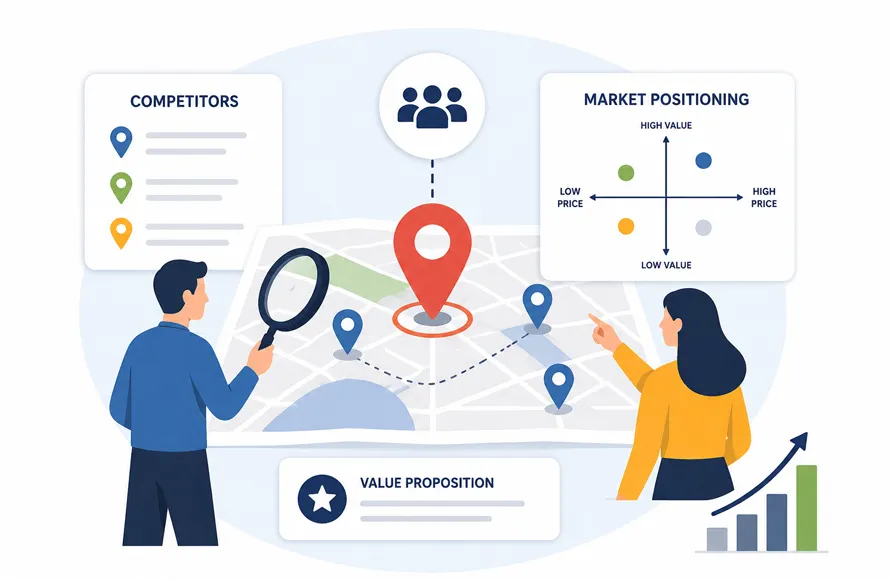
Trying to serve everyone is a sure recipe for quickly becoming irrelevant. This is why you need to establish who your brand is targeting clearly.
To this end, you can employ several strategies, including:
- Mapping out your direct market competitors to uncover any gaps in their offerings.
- Creating a highly specific value proposition that articulates precisely why a consumer should choose you.
- Determine whether your primary growth level will be defensive market share protection or radical innovation.
You need to position your brand to be the intuitive and irresistible first choice within your chosen niche.
Step 4: Develop an Authentic Voice and Visual Identity
Your brand identity must humanize your business across every medium.
You can do this by:
- Choosing a memorable brand name that’s easy to pronounce and find via search.
- Outlining a specific brand voice and personality that will dictate how you communicate across all your channels.
- Establishing a cohesive brand kit that features distinct color palettes, font pairings and clean logos.
Consistency builds immediate credibility in crowded marketplaces.
Step 5: Establish a Multi-Channel Presence and Systemized Rhythm

Partnering with an experienced, forward-thinking creative agency helps translate abstract strategy into striking visual assets. The secret to visibility is to implement a clear system as opposed to sporadic busts of motivation. This means that you should:
- Select distinct online platforms that align with where your target audience spends most of their time.
- Optimize all your professional bios and landing pages with clear keywords and expert proof points.
- Build in public by sharing raw, unscripted behind-the-scenes processes to deepen your customer connections.
Try not to dilute your presence by signing up for every new app. Instead, choose 3 core platforms and dominate them through relentless quality.
Step 6: Enforce Strict Operational Consistency
A brand is a promise that needs to be kept across every point of contact, which is why the alignment of your internal team is just as important as your external marketing campaigns.
As such, you will need to:
- Centralize your digital asset management
- Regularly train your client-facing staff
- Match advertising with reality
- Maintain a uniform style of emailing
- Reject fleeting viral trends
Inconsistencies have the potential to instantly destroy your consumers’ trust.
Step 7: Co-Create with Community and Optimize for Trust

Modern brand management is a collaborative conversation, and that’s why the biggest brands actively involve their audience.
To capitalize on this, you can:
- Launch dedicated customer forums
- Gather honest user feedback
- Feature genuine community testimonials
- Reward long-term customer loyalty
Treating your customers like valued partners will go a long way in creating brand loyalty because they’ll feel like you care about them and not just their money.
Modern Strategies For Modern Brands
Business success consistently relies on a brand’s ability to adapt to the desires and expectations of its consumers. To this end, brands wishing to attain success and stay relevant need to adjust their strategies for the current market.
(Visited 13 times, 13 visits today)